

"Same campaign — why do impressions drop in certain time slots?"
If you operate ads long enough, you run into weird variance like this:
- Same budget, but CPM $8 in the morning and $22 in the evening
- Almost no impressions at 2 AM
- Conversions suddenly clustering at lunch
Some of this is user behavior, but some of it is variance driven by Meta's internal infrastructure state. A July 2024 Meta Engineering blog disclosed what's behind that hidden variance.
Source: Meta Engineering — Taming the tail utilization of ads inference
What is tail utilization?
For an ad to be served, Meta has to run thousands of model inferences in real time (Andromeda and GEM are among those models). Tens of thousands of servers handle inference, and each one's utilization fluctuates moment to moment.
Tail utilization: the state of the top 5% most utilized servers.
Example:
- Average server utilization: 60%
- 95% of servers: 50–70% (normal)
- Top 5%: saturated at 95–100% ← this is the tail
When tail servers saturate, the requests they handle time out → the ad fails to serve. That's one cause of the "impressions suddenly dropped" experience advertisers describe.
What Meta improved
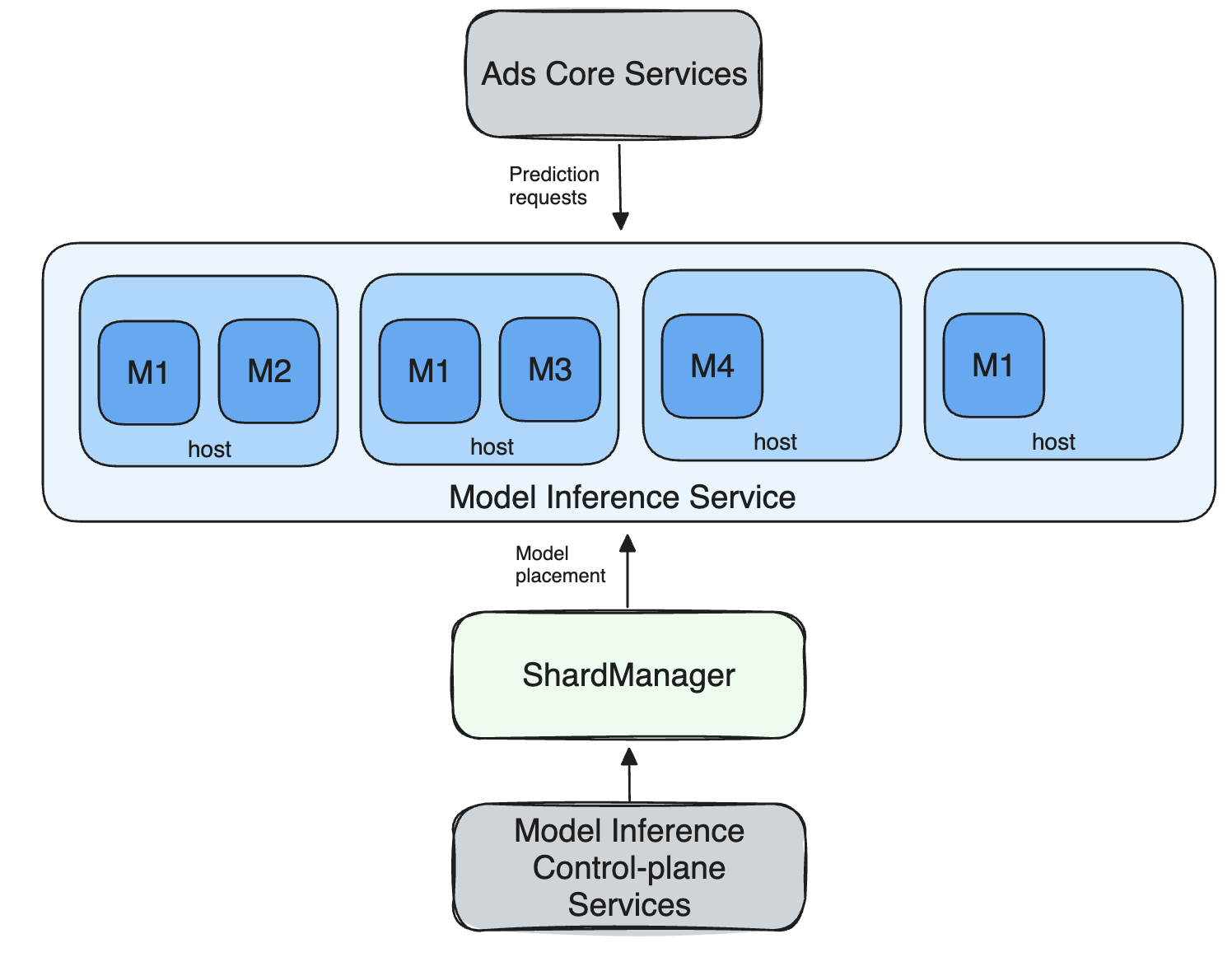
Official numbers after the 2024 improvements:
- Timeout errors down 66%
- 35% more workload handled with the same resources
- p99 latency (top 1% response time) cut by 50%
That is: "the slow 1% of requests" got faster. That 1% accounts for most of the "weird variance" advertisers feel.
What actually matters in practice
1. Better understanding of "time-of-day CPM variance"
You can now separate causes more cleanly:
- User behavior variance (evening 6–9 PM usage increases → CPM rises) = expected
- Infrastructure variance (tail utilization) = shrinking — Meta is handling it
Advertisers should stop suspecting infrastructure and focus on user behavior — Meta keeps solving the infrastructure problems.
2. Another reason to trust Advantage+
One reason Advantage+ campaigns outperform manual is faster adaptation to Meta's infrastructure state. Automated systems reroute requests around high-tail-utilization servers. Advantage+ captures more of this benefit than manual.
3. Recalibrate what counts as "abnormal" impression variance
Daily impression spikes are normal (mix of tail utilization, user behavior, and auction state). Get into the habit of judging by weekly average.
Diagnosing "hiccupy" impressions
When impressions feel irregular, sort the cause:
| Symptom | Cause | Response |
|---|---|---|
| CPM differs 2–3x across dayparts | User competition density | Normal — don't adjust bids |
| 30%+ daily impression variance | In learning phase | Wait for learning to complete |
| Weekly impressions crash | Budget cap or policy violation | Check billing and policy |
| Zero impressions on a placement | Placement algorithm | Let Advantage Placement auto-distribute |
Infrastructure issues (tail utilization) are Meta's own to handle — nothing for advertisers to do.
So where does that leave us?
What not to do:
- Adjusting budgets immediately on an impression bump (disrupts learning)
- Manually adjusting time-of-day bids (meaningless on modern Meta)
- Locking to a specific placement (giving up Advantage Placement)
What to do:
- Judge on weekly averages (treat daily data as reference only)
- Lean on Advantage+ automation (auto-routes around infrastructure issues)
- When impressions drop sharply, check budget, policy, events first (not infrastructure)
Bigger picture
The tail utilization work signals that Meta is continuously optimizing the infrastructure handling trillions of requests. It's not just AI models like Andromeda and GEM improving — the bedrock systems are getting faster in parallel.
Advertisers have no direct lever here, but it's worth knowing as context: the Meta platform is evolving stably. That stability is what makes Advantage+ and automation trustworthy.
Performance variance interpretation, metric reading, and A/B testing are covered in Meta Ads Book 4.